
Abstract Landscapes; Painting with Light
After spending time mastering a camera for sharpness, focus, or other commercially ordained merits, it comes as a natural curiosity and liberation to subvert the rules of the craft. The ‘rules’ in many creative pursuits are often framed as a useful scaffolding for accelerating one’s understanding and mastery of the tools at their disposal - composition, lenses, equipment, processing workflows, etc.. Then, a creative may be encouraged to break that scaffolding, with the backing of experience that helps them to do so in ways that support their creative vision - rather than constrain it.
Today’s photo newsletter is an exploration of one way I’ve been trying to loosen up some of the technical boundaries in my own practice, in the form of abstract landscapes! There are lots of ways to make abstract photography, but the one in focus here is a good old fashioned long exposure; paired with camera movement and some tight composition. There had been a number of times over the years where after taking static long exposures (of waterfalls, the ocean, etc) I accidentally hit the shutter again while swivelling the camera on a tripod. Sometimes it resulted in genuinely intriguing visuals, but I admittedly discarded them over some sense that they weren’t professional or suitable within my existing body of work. Says who? Silly!
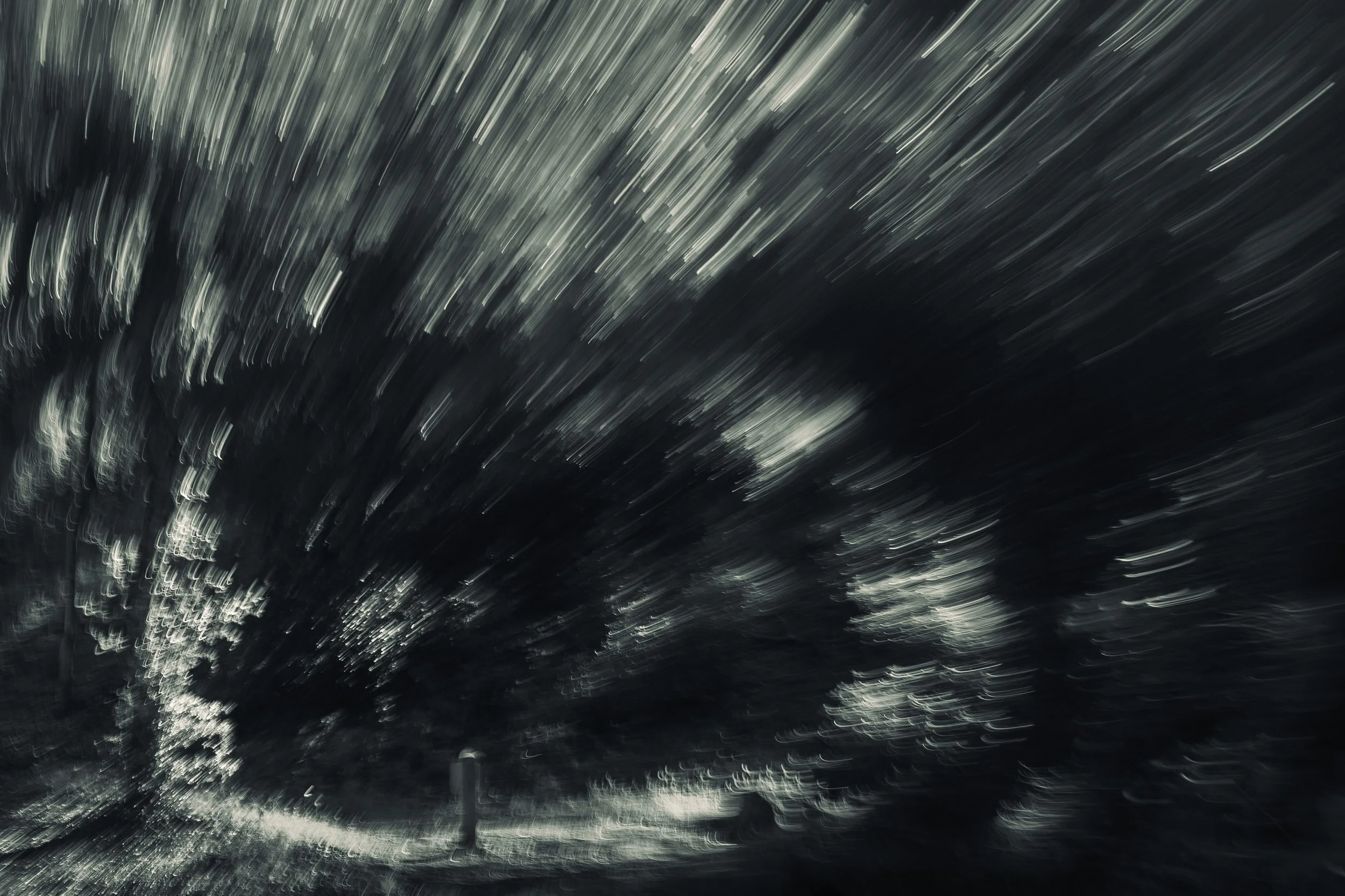
The first image here was taken a few months ago on a trail in Muir Woods, California - I was having a great conversation with a friend about fun ways to apply unconventional methods to in-camera images. Try framing the act of making a photograph as a painter might.. Light as paint, the lens as a brush, and the sensor as a canvas. Through that thought, how does your idea of a ‘photograph’ change? For me, it enables the photographer to be a bit less literal. To find some interesting ways to build up an image that doesn’t tie its value to it’s documentary merit or realism.
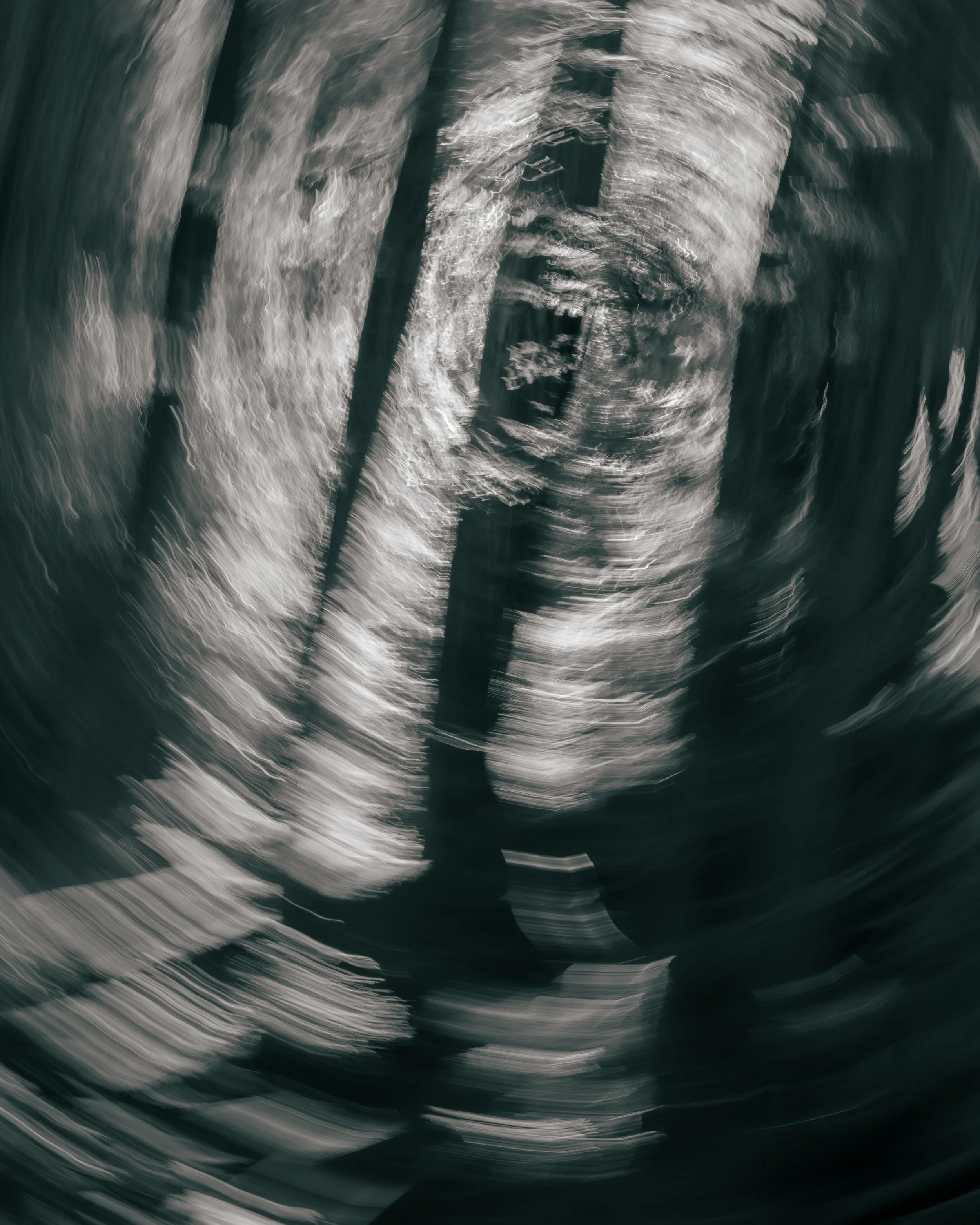
Muir Woods - ISO 64 | 50mm | f/16 | 1/4th sec
Archival Pigment Print, Metallic Photorag
This shot was a simple ‘twist’ of the camera while shooting at 1/4th sec exposure. The camera faces an array of redwoods trees backlit by the sun. Simple subject - huge variety in interpretation. This ties into the story below, which is an exploration of somebody’s deep engagement with this image that gave me a greater appreciation of other individuals’ experiences with my own photography.
The friend shared a copy of this image with a gentlemen in Austria. I was floored by the eventual writing he published on archive.org, where he documented his annual reflective journaling while observing the image daily.
With Michael’s permission, here are a few excerpts from it:
(Translated from German to English)
—
01.12.2025
“The photo from Muir Woods, California, which a friend sent me, now hangs on the wall in my apartment. Aikido is behind me. I'm still here, but I'm looking elsewhere now. The picture shows the back of my head, with my ears on either side. Where my head rests on my neck, at the level of the atlas, a Daoist Taijitu® is visible, with Yang above and Yin below, a circle within a square.
From this center, my mind spreads in all directions. I am open and clear, but I am not yet completely free, not yet balanced. The past rests upon me. Not only as a burden I carry, but also as a gift that gives me strength. A mirror, then, in which I see the back of my mind.”
02.12.2025
“A clearing in the forest. A light breeze stirs the branches and twigs, pine needles occasionally fall to the ground. The sun's rays fall as well. They follow their path without pause, undisturbed.
A play of light and shadow, something both ancient and exquisitely subtle. It has rules we could describe, but now, in this moment, it's not about the rules, but about the beauty. We allow the moment to touch us, and language dissolves in the fullness of being. Infinite, stirring stillness.”
04.12.2025
“A stone falls into a pond. The point of contact with the water's surface becomes the center of circles of ripples, peaks and troughs. A force that spreads long after the stone has disappeared. A force we can feel.
Two infinitely dense black holes collide. The site of this event becomes the center of gravitational wave propagation in space and time. A force that spreads because two have become one. A force that far surpasses our comprehension. A force we cannot feel. Because we are the waves…”
08.12.2025
“It is night. I stand on a wooden jetty, gazing at the dark water of a pond where the moonlight is reflected. The surface of the water forms a boundary between the known and the unknown. What might be in the water? What plants and animals might grow and die there? The thought of falling into the pond, of being pulled into this underworld, terrifies me.
I look up at the softly glowing moon. It is beautiful, but nothing and no one grows there. A place to die. Our troubles and worries, our desires and hopes, all that we call our lives, unfolds in a fragile sphere that envelops our home planet. Fear gives way to humility.
[...]
I'm growing impatient: Where are the insights? Has everything already been thought through, or am I simply afraid to delve deeper? What would it mean to go deeper? Must I perhaps jump into the black waters of the night pond to find answers? Or is it enough to gently hold my fear within, trusting that it will transform? Whatever I do will be the right thing. Doing something is the right thing to do.”
—
Firstly, thanks to Michael Horvath for sharing this and embracing the vulnerability of inner thought. If you’d like to see his whole text, find it here.
I don’t know about you, but I love hearing about the unique experiences people have with any given image / artwork. This was a rare opportunity to see a genuinely deep engagement with one of my own works translated into words. Cool!
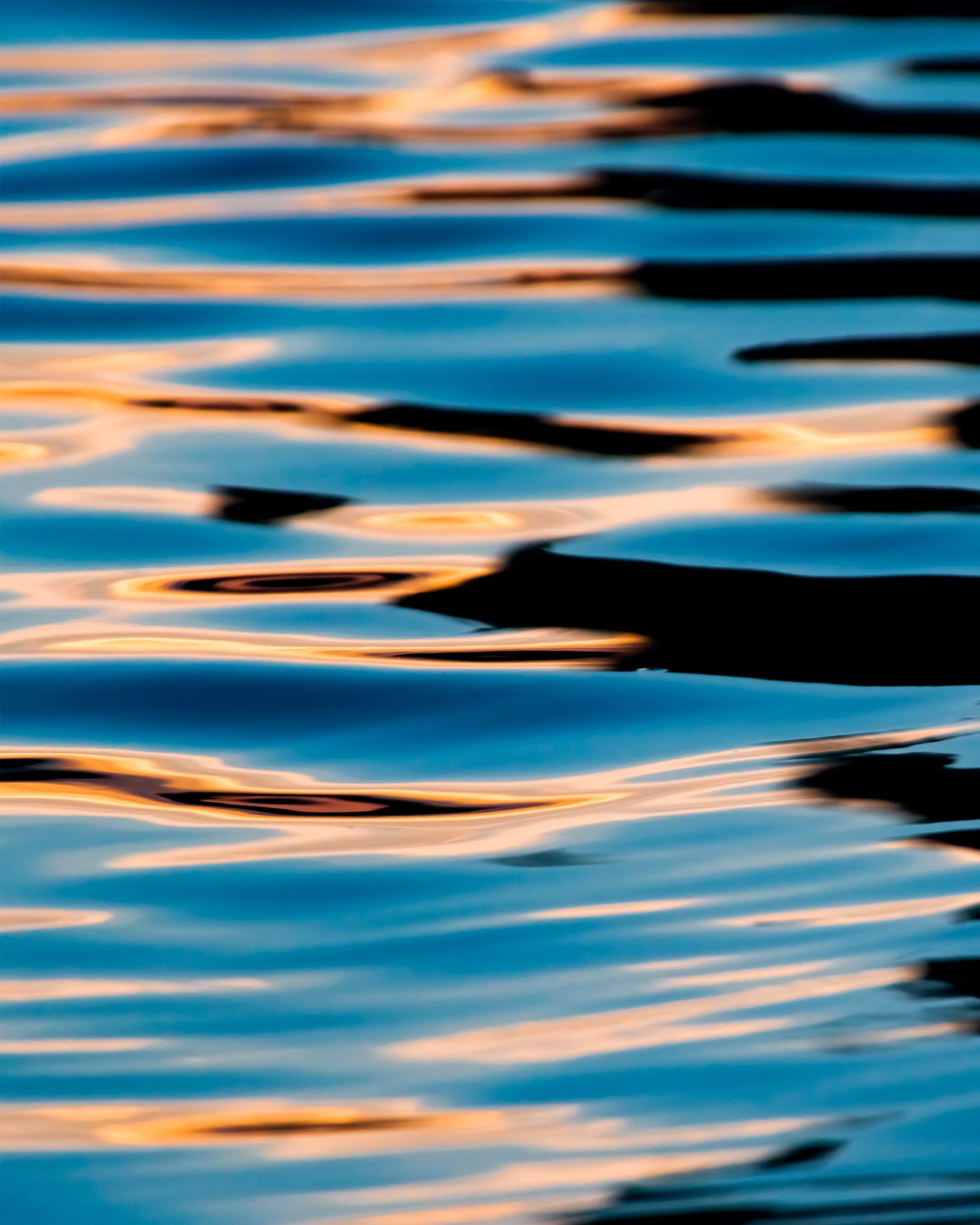
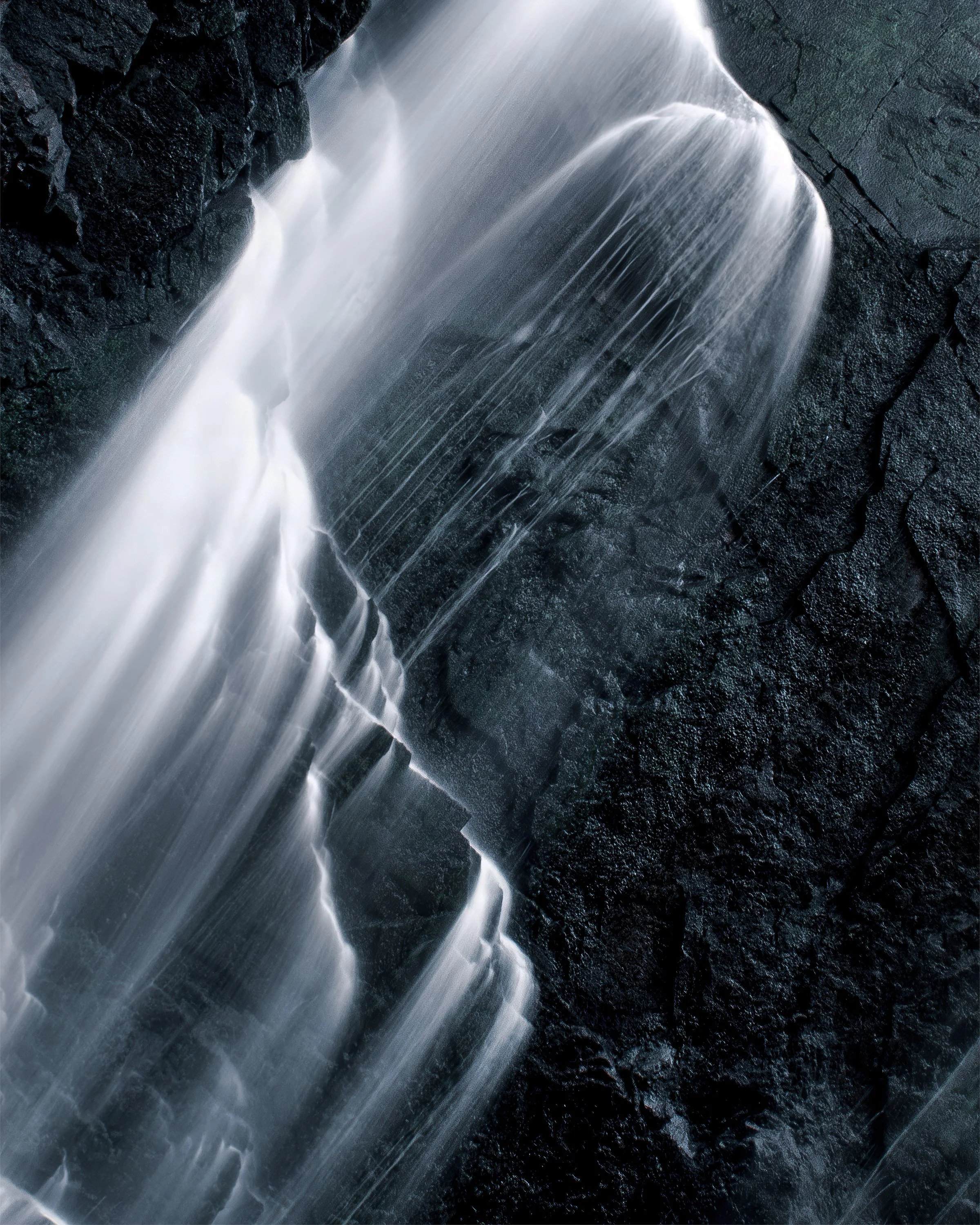
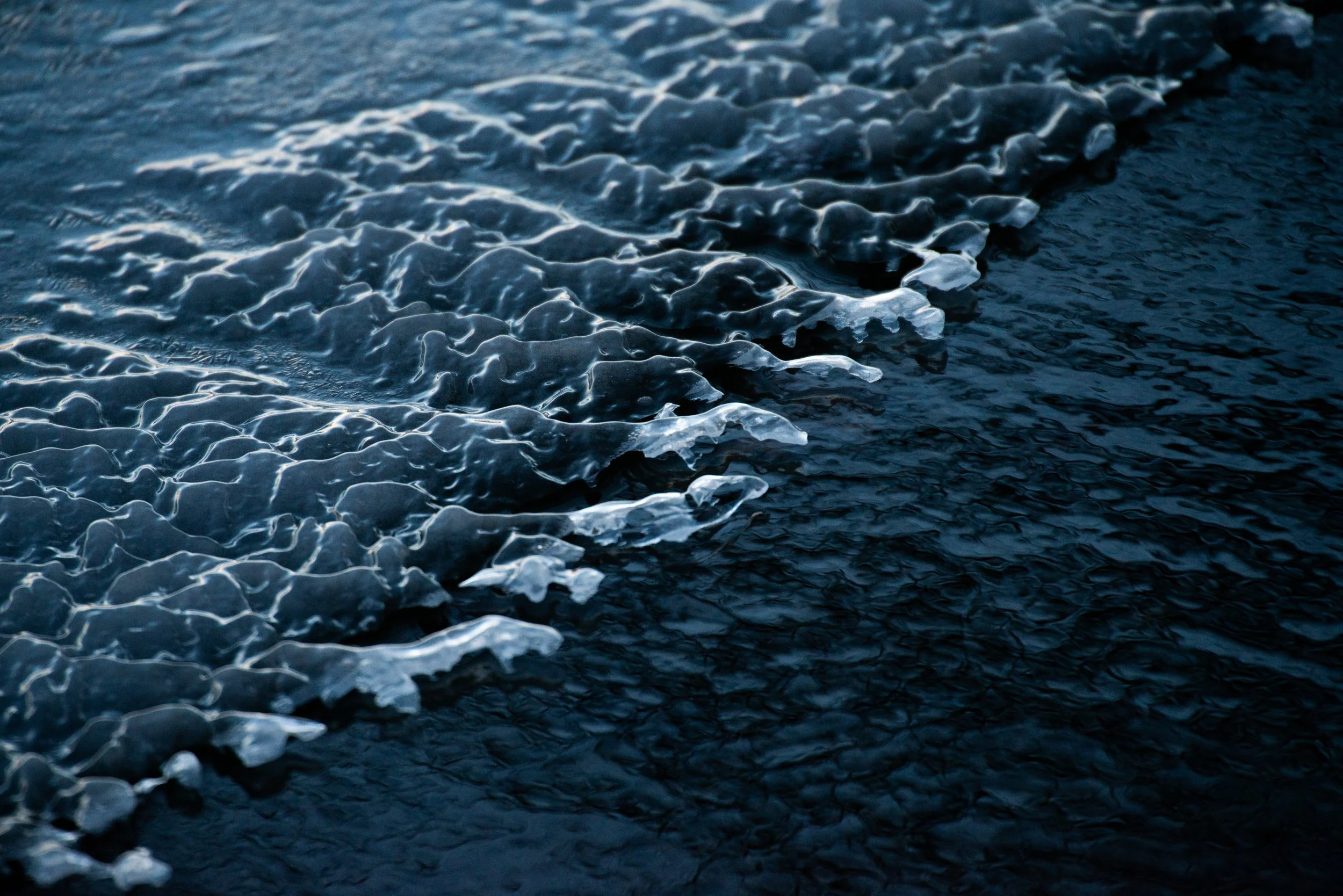
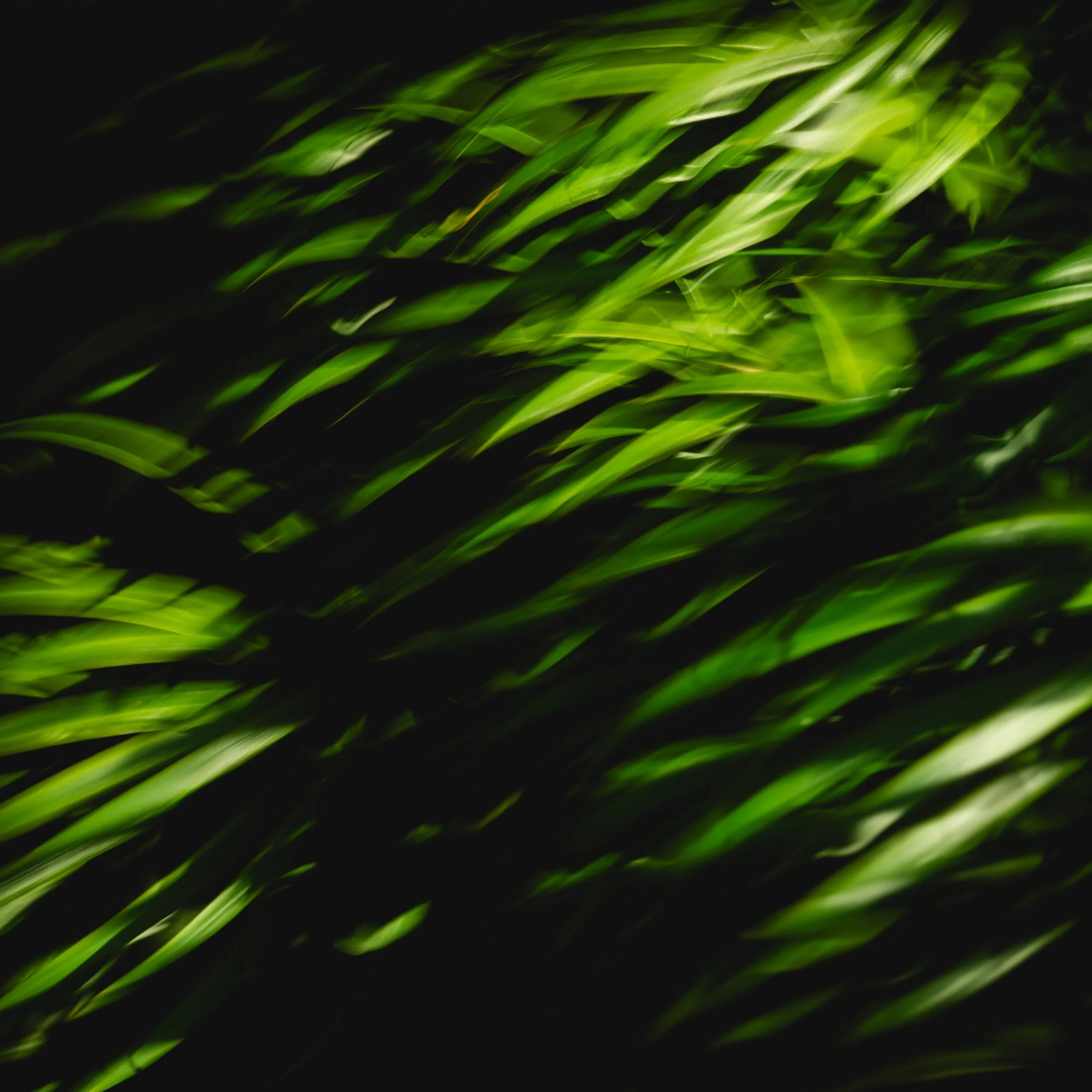
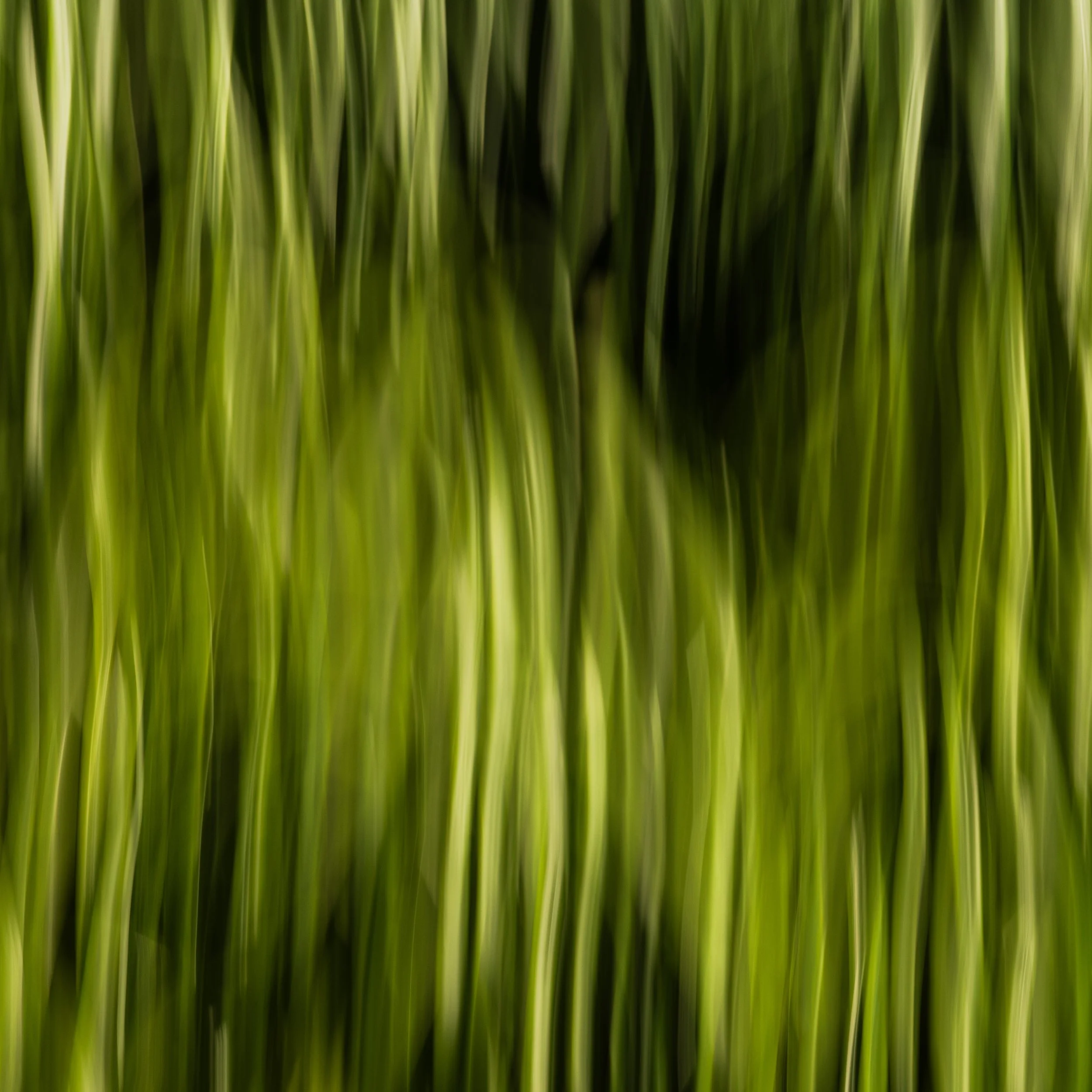
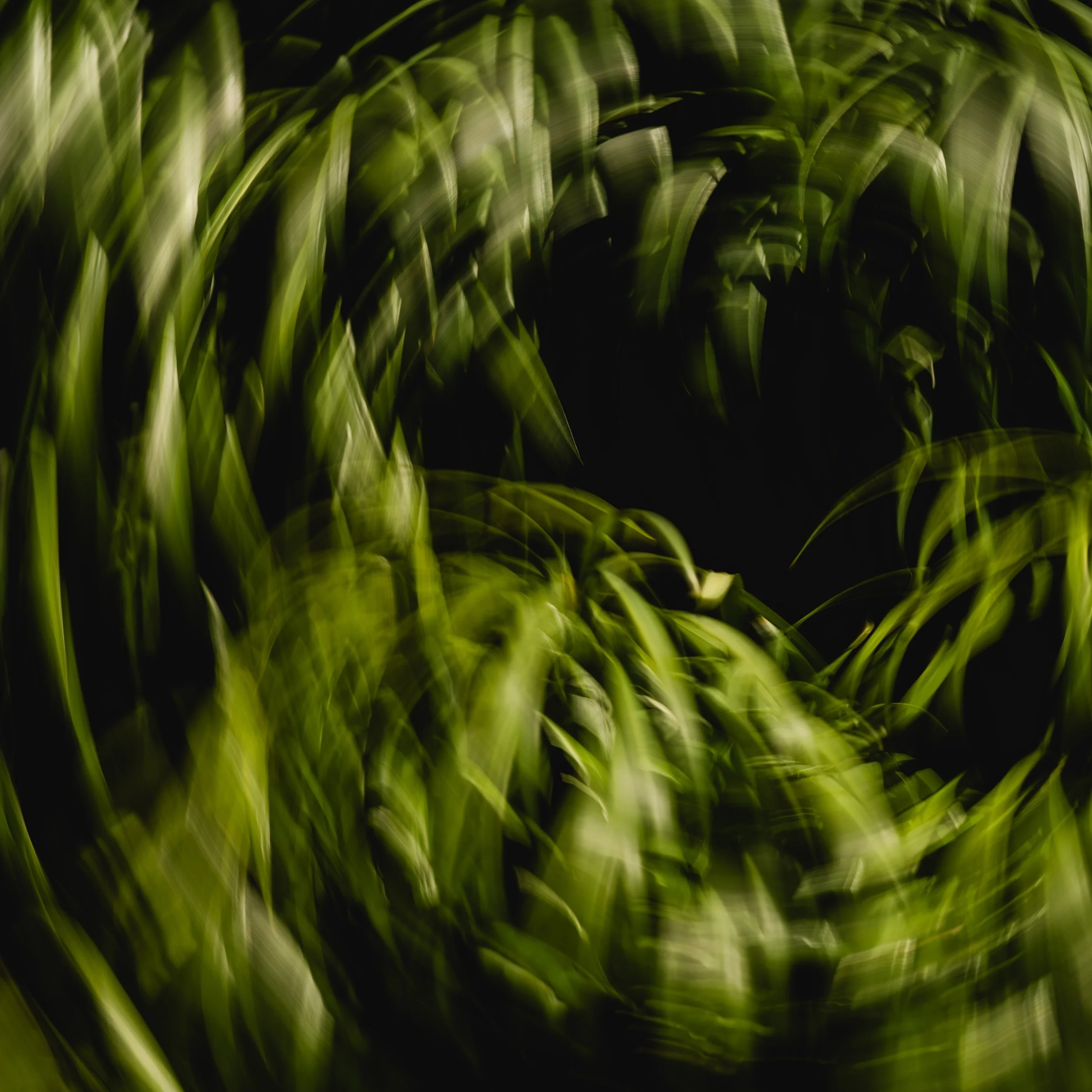
To close out today’s newsletter, below are a few more abstract-landscape style images. Most of these are printed on Photorag Metallic archival papers.
I’ll refrain from explaining a literal context, for now - what do you see?
Catcha later,
Murph
